Black Friday: how to shop safely without putting your business at risk
26 November 2026
Black Friday lands on Friday 27 November this year, with Cyber Monday following on 30 November. For most of us that means a few good deals and an inbox full of offers. For scammers, it's one of the best weekends of the year.
The reason is simple. Everyone is expecting emails from retailers, order confirmations and delivery updates, so a fake one blends right in. People are busy, distracted and a bit rushed, which is exactly what fraudsters rely on.
And while it might feel like a personal shopping problem, it very quickly becomes a business one. A single click on a work device or with a work email address can open the door to your systems, your data and your clients.
Here's what to look out for, and a few simple habits that will keep your team safe this weekend and through the run-up to Christmas.
The scams to watch for
Too-good-to-be-true deals. Emails, texts and social media ads offering huge discounts on big brands. The link takes you to a convincing copy of the real site, which takes your card details and your login.
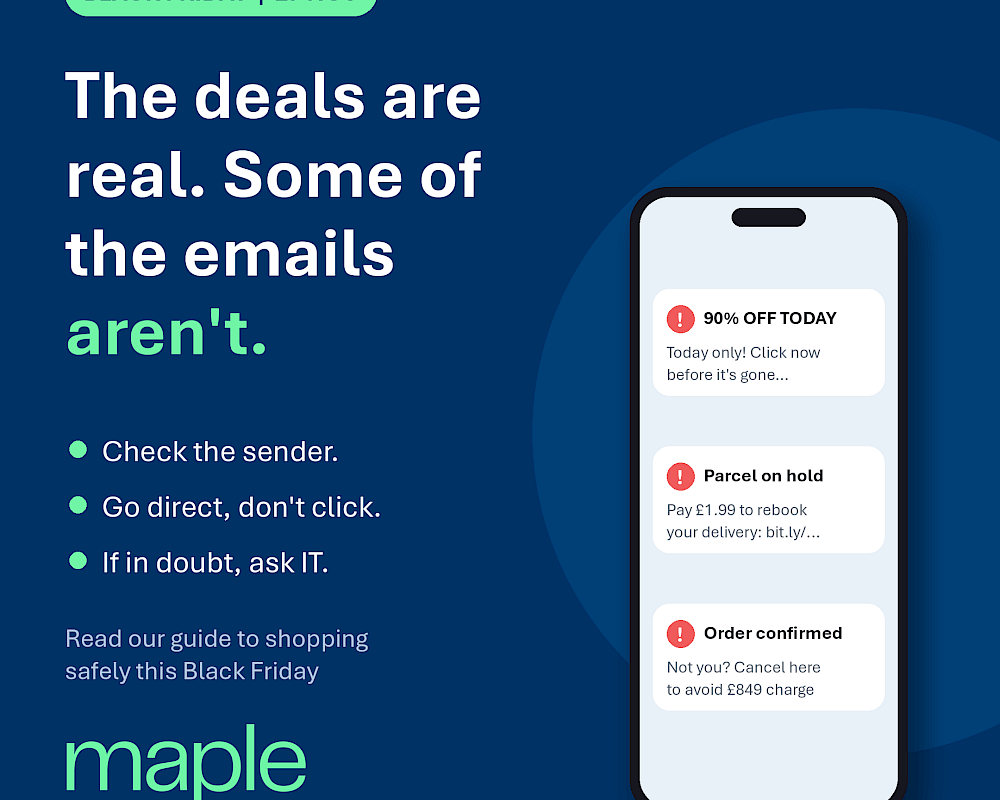
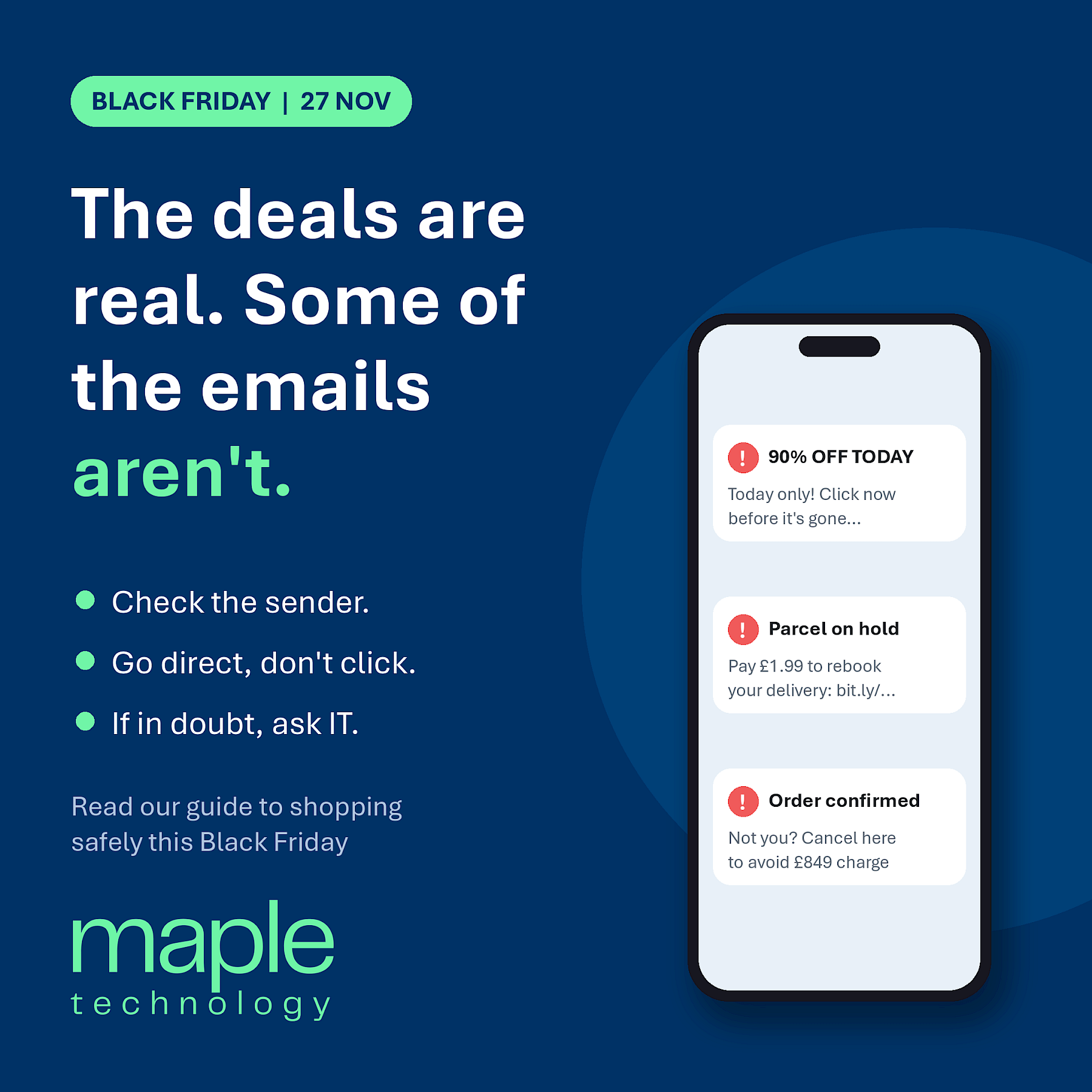
Fake delivery messages. "We tried to deliver your parcel, pay £1.99 to rebook." With so many orders on the go, it's easy to assume it's one of yours. Real couriers rarely ask for payment like this.
Phishing that reads perfectly. Spelling mistakes used to be a giveaway. Not any more. AI tools mean scam emails are now well written, personalised and often reference real brands or recent purchases.
Fake order confirmations and refund notices. "Your order of £849 has been placed. Not you? Click here to cancel." The panic is the point. The link is the trap.
Lookalike websites and social ads. A web address that's one letter off, or an ad for a shop that only exists for the weekend. If you've never heard of the seller, do some digging before you pay.
Gift card requests. Any message asking you to pay for something, or settle a bill, with gift cards is a scam. Every time.
Why this matters for financial services firms
If you work in financial services, you're already a more attractive target than most. You hold sensitive client data, you move money, and your reputation depends on trust.
That makes this weekend riskier for a few reasons:
- Staff shop on work devices. It happens, especially on a quiet Friday afternoon. A dodgy site or download on a work laptop puts business systems at risk, not just a personal bank account.
- Work email addresses get used for personal sign-ups. That means more marketing, more spam and more chances for a scam email to look legitimate.
- Stolen passwords get reused. If someone uses the same password for a shopping site and a work account, one breach can lead straight to the other.
- The regulator expects you to manage it. A breach caused by a staff member clicking a link is still your breach. Clients and regulators will want to know what controls you had in place.
None of this needs to be scary. It just needs a bit of awareness and a few good habits.
A quick checklist for your team
Worth sharing with your staff before the weekend:
- Go direct. If an offer looks good, type the retailer's address into your browser yourself rather than clicking the link.
- Check the sender and the link. Hover over links before you click. Look at the actual email address, not just the name and logo.
- Keep work and personal separate. Don't shop on work devices and don't use your work email for personal accounts.
- Use unique passwords. A password manager makes this easy. Never reuse your work password anywhere else.
- Turn on multi-factor authentication. On your email, banking and shopping accounts. It stops most account takeovers in their tracks.
- Pay with a credit card or trusted payment service. You'll get much better protection if a seller turns out to be fake.
- Slow down. Countdown timers and "only 2 left" messages are designed to rush you. A real deal will still be there in five minutes.
- If in doubt, ask. A quick check with your IT team costs nothing.
What to do if someone clicks
It happens to the best of us. What matters is what happens next, and speed makes a big difference.
- Tell IT straight away. Don't wait to see if anything happens. The sooner we know, the sooner we can contain it.
- Don't enter anything else. If a page is asking for more details, close it.
- Change your password. If you typed a password into a suspicious page, change it immediately, along with anywhere else you've used it.
- Call your bank. If you entered card details, contact your bank or card provider using the number on the back of your card.
- Report it. Forward scam emails to report@phishing.gov.uk and scam texts to 7726.
Most importantly, make sure your team knows they won't be blamed for speaking up. A culture where people report mistakes quickly is one of the best security controls you can have.
Shop smart, stay safe
Most Black Friday scams don't rely on clever technology. They rely on people being busy and in a hurry. A little caution goes a long way, and the habits that keep you safe this weekend will keep you safe all year round.
If you'd like help putting the right protections in place, from email filtering and multi-factor authentication to staff security training, get in touch with the Maple team. We're always happy to talk it through.
Happy (and safe) shopping.